Key Takeaways
-
Grout line width affects whether a tiled surface looks continuous or strongly patterned.
-
Tile edges, format, colour, layout, and installation guidance all influence the suitable joint.
-
Compare a larger sample with your room finishes before you decide on the overall look.
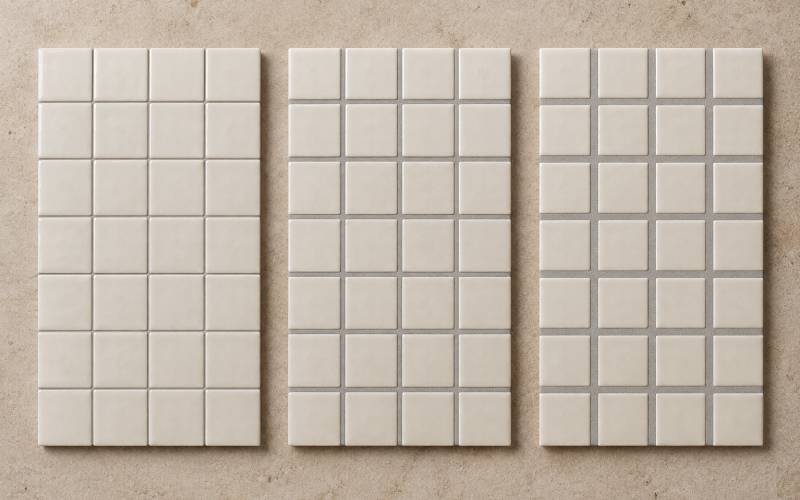
A narrow joint can make a tiled surface appear more continuous, while a wider or contrasting joint can define each tile more clearly. Grout line width is only one part of the decision: tile dimensions, edge finish, layout, colour, and product guidance all affect the finished result. We discuss these details with homeowners before they settle on a design.
How Does Tile Size Affect Grout Line Width?
Large-format tiles create fewer joints across the same area. On a broad floor or wall, a restrained joint can preserve a calm, open appearance. Still, the line width should suit the specific tile and installation, not be chosen only to make the surface look seamless.
Smaller formats make joints more visible. With mosaic tiles in Singapore, for example, grout outlines many individual pieces and becomes part of the pattern. That can suit a decorative wall, while a tonal grout may create a quieter effect.
Does the Tile Edge Affect the Joint?
Rectified tiles have edges mechanically finished after firing to create more consistent dimensions. This can support a narrower joint when product specifications and site conditions allow. Rectification does not mean you should lay tiles without joints.
Non-rectified tiles may vary more in size or have softer edges. A suitable joint accommodates those differences and can complement a rustic or handmade look. Ask your installer to check the manufacturer’s guidance and the tile’s dimensional variation before agreeing on a measurement.
How Much Pattern Is Already on the Tile?
Veining, terrazzo chips, wood grain, and decorative motifs each draw the eye. A strong grout grid can add another pattern, so consider whether the tile or its outline should be more prominent. With a plain ceramic tile, contrasting grout can make the tile shape more prominent, while a matching shade creates a more understated finish.
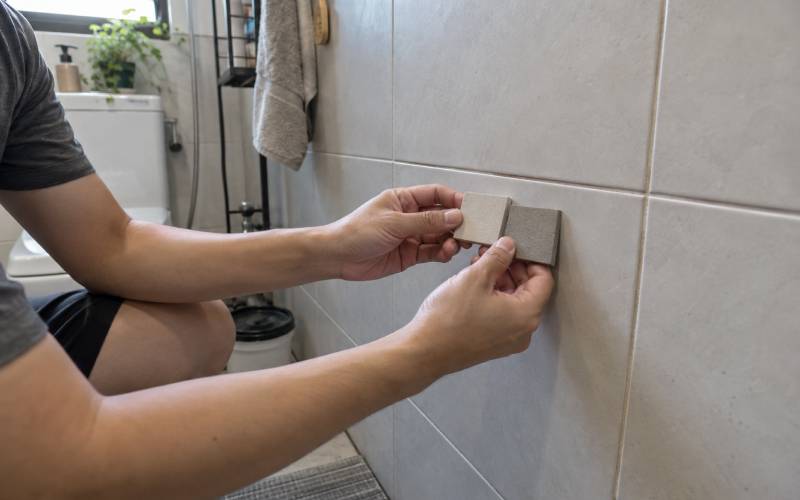
Look at several pieces together. One loose sample shows neither the full pattern range nor how grout repeats across the room.
Could Grout Colour Matter More Than Width?
A close colour match makes joints less noticeable. Contrasting grout outlines tile shapes and can change the character of a wall, even when the joint itself is unchanged. When you compare grout spacing, assess colour and width at the same time.
Place a grout sample next to the tile in lighting similar to your home. Screen images and showroom lighting can make shades look different from how they will appear in the room.
Does the Grout Treatment Suit the Room?
Quieter joints may suit a minimal interior, while a clear grid can work with retro, industrial, or decorative schemes. Neither treatment is automatically better. Consider the cabinets, worktops, fittings, and other finishes around the tiled surface.
If you are comparing porcelain tiles in Singapore for a room with patterned cabinetry or a veined countertop, a restrained grout colour may help keep the overall palette balanced.
How Do Layout and Tile Spacing Work Together?
A stacked layout creates a regular grid; a staggered arrangement shifts where vertical joints fall. Turning rectangular tiles changes the direction of the pattern. Plan the layout with the tile orientation and the position of cuts at corners, doorways and fittings in mind.
The spacing between tiles also affects how clearly each piece reads across a larger surface. A layout drawing or larger display can help you judge the repeated effect more accurately than a couple of loose samples.
What Should You Consider for Everyday Care?
A surface with many small tiles has more joints to maintain than one with larger formats. Cleaning needs also depend on the grout product, finish, location, and exposure to moisture or spills. Joint width alone cannot tell you how much care a surface will need.
Ask which cleaning products suit both the tile and grout. In a kitchen or bathroom, consider how the grout colour may look between cleanings and choose a routine you can maintain.
How Can You Judge the Whole Tiled Surface?
A joint that looks prominent between two samples may feel balanced once repeated across a wall. A slight contrast can also become a strong grid across a large area. Step back and consider the room’s scale, tile orientation, grout shade, and surrounding materials.
It is easier to assess grout line width when you view tile and grout samples together. Before finalising the design, confirm the technically suitable joint with your installer. Industry guidance also explains that the acceptable range depends on the tile, application, and installation method.
Choose a Joint That Works With the Design
A suitable grout line width depends on how the tile, grout colour and layout work together. The best option usually complements the look you want and meets the product’s installation requirements. Review the joint across a larger area, and confirm it with your installer to choose a finish that feels cohesive in the room.
About Soon Bee Huat
Soon Bee Huat has more than 30 years of experience in tiles, stones and mosaics, with a curated range from global brands. Our advisors can help you compare colours, finishes and formats, and consider how grout choices may affect the finished look. Bring your room measurements and finish references when you visit one of our three Singapore showrooms, or contact our team to discuss options for your space.
Frequently Asked Questions
Is there one ideal grout joint width for every tile?
No. The suitable width depends on the tile’s dimensions, edge finish, product guidance, layout, and installation conditions. Ask your installer to confirm the requirements for the selected product.
Can rectified tiles be installed without grout joints?
No. Rectified edges may allow narrower joints in some cases, but the product still needs appropriate spacing. Follow the manufacturer’s instructions and your installer’s advice.
Should grout always match the tile?
No. A close match creates a quieter look, while a contrasting colour highlights the tile shapes and layout. Compare both against your other finishes.
Are wider joints easier to clean?
Not necessarily. Maintenance also depends on the grout type, surface texture, room use, and cleaning routine.
What should I bring when comparing grout colours?
Bring a tile sample, room photographs, and references for cabinetry or worktops. Compare them under lighting similar to your home.