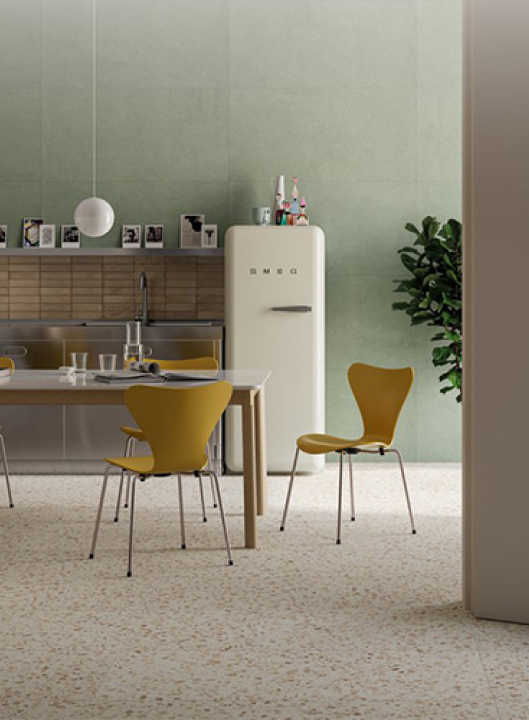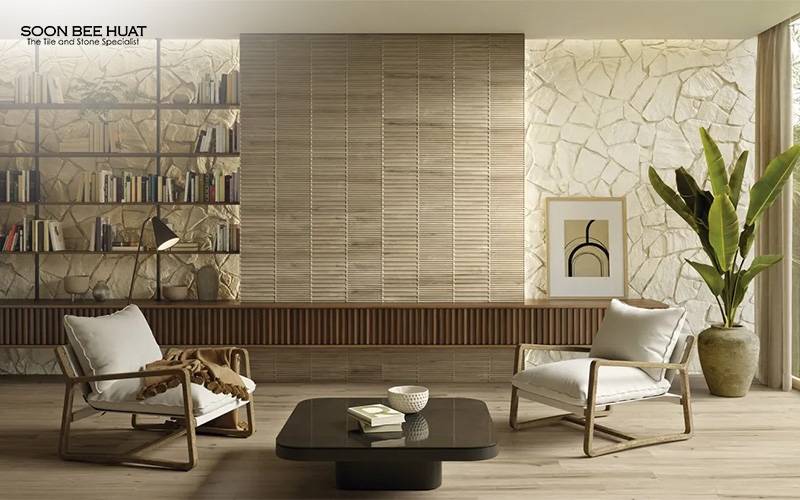
When it comes to renovating your home, many people get excited about paint colours, cabinetry, or décor, yet the foundation of your interior design lies in something far more fundamental: your choice of tiles and stones. These surfaces form the literal base of your home, and the wrong decision can affect not just aesthetics but also comfort, safety, and long-term maintenance.
In Singapore, where humid conditions and compact living spaces dominate, poor choices can lead to daily frustrations- slippery bathrooms, mouldy grout, or surfaces that stain easily. On the other hand, selecting the right tiles and stones can give you what every homeowner secretly wants: practical luxury. Imagine floors that are both elegant and easy to clean, or walls that look sleek yet can withstand daily wear. That balance between beauty and low-maintenance durability is what makes or breaks your renovation.
In this guide, we’ll dive deep into the art of achieving practical luxury with low-maintenance floor tiles and stones. Beyond just looks, we’ll explore how to select the right materials for Singaporean homes, how to plan layouts and transitions like a pro, what to expect during installation, and how to maintain your surfaces in the long run. Whether you’re renovating a new BTO, refreshing a resale flat, or upgrading your landed property, this guide will help you make informed decisions that give you sophistication without the stress of constant upkeep.
Key Takeaways
-
Smart Material Choices Are Essential: Selecting tiles and stones that suit the room’s function, climate, and lifestyle is the foundation of practical luxury- durable, stylish surfaces make everyday living easier and more elegant.
-
Thoughtful Layouts Elevate Interiors: The way tiles are laid, from patterns to transitions and orientation, can transform a space, making it feel larger, more cohesive, and effortlessly sophisticated.
- Maintenance Preserves Beauty: Regular care, proper sealing, and attention to grout and humidity issues ensure your tiles and stones remain polished and low-maintenance, helping your home retain its practical luxury for years.
Selecting the Right Tiles and Stones for Singaporean Homes
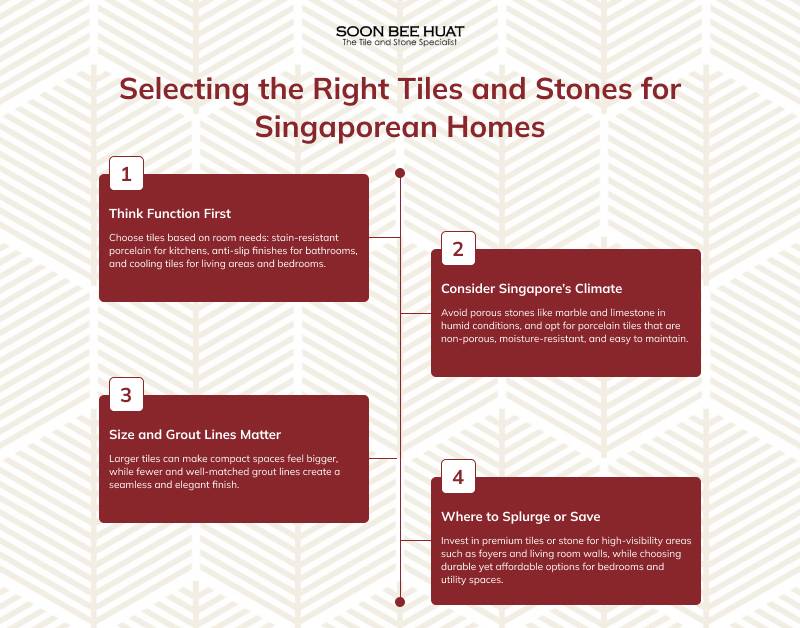
Before we get carried away with layouts, colours, and design trends, let’s first focus on the foundation: choosing the right tiles and stones. No matter how sleek your furniture or how modern your lighting is, the surfaces you walk on and touch daily set the tone for your home. In Singapore, where humidity, compact living, and high-traffic areas are the norm, your choice of materials isn’t just about appearances, it’s about creating practical luxury, where elegance meets long-term functionality.
1. Think Function First
Start with practicality. Every room has its own needs, and your tile choice should reflect that. Kitchens demand stain-resistant porcelain tiles that can withstand spills and oil splatters. Bathroom tile flooring requires anti-slip finishes to prevent accidents in wet conditions. Living rooms and bedrooms can benefit from cool-to-the-touch tiles that make tropical afternoons more comfortable. By matching each material to its role, you lay the groundwork that doesn’t compromise safety or comfort.
2. Consider Singapore’s Climate
Our humid weather can wreak havoc on porous stones. Marble or limestone, for example, may absorb moisture and develop unsightly stains if not maintained properly. Porcelain tiles, on the other hand, are non-porous, moisture-resistant, and easy to clean, making them an ideal choice for homes here. When you account for climate in your selection, you not only avoid future headaches but also preserve the timeless look of your home.
3. Size and Grout Lines Matter
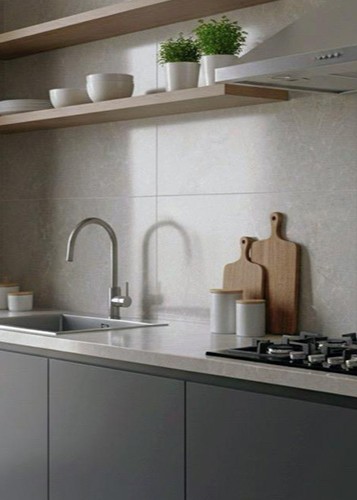
Tiles are not just surfaces; they shape how we perceive space. Larger tiles can make small HDB rooms feel more expansive while reducing grout lines (and the cleaning that comes with them). Choosing a grout colour that blends seamlessly also elevates the overall look. These little details are what transform a plain floor into an understated statement of practical luxury.
4. Where to Splurge or Save
Finally, be strategic. You don’t need to cover every corner with high-end stone. Splurge on premium finishes in high-visibility areas like foyers or living room walls, while opting for affordable but durable tiles in bedrooms or utility spaces. This balance ensures you enjoy practical luxury where it matters most, without stretching your budget unnecessarily.
Selecting the right tiles and stones is more than just a design decision, it’s the foundation of a home that feels both beautiful and liveable. By thinking about function, climate, size, and where to invest, you set the stage for practical luxury that lasts. With the right choices, every step you take in your home can feel effortlessly stylish and reassuringly low-maintenance.
Planning Layouts and Transitions Like a Pro (Even If You Aren’t One)
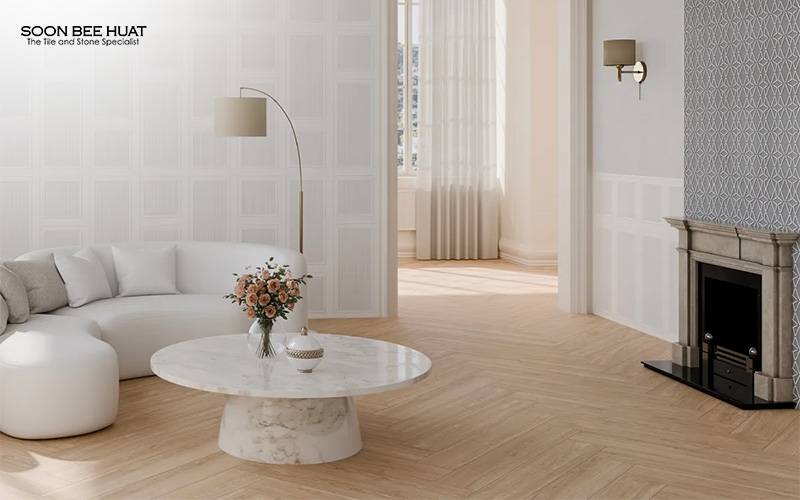
Now that we’ve explored how to choose the right tiles and stones, the next step is just as important: planning how they’ll be laid out in your home. Even the most expensive tiles can lose their appeal if the layout feels awkward or disjointed. On the other hand, thoughtful planning can make affordable materials look high-end. This is where design meets practicality, allowing you to achieve that coveted balance of practical luxury.
1. Open-Concept Flow
Singaporean homes often embrace open layouts, where living, dining, and kitchen areas blend together. While this makes a space feel larger, it can also highlight awkward transitions if tiles don’t flow seamlessly. A simple solution is to use the same flooring across multiple rooms to create continuity. For example, large-format porcelain tiles in a neutral shade can unify spaces while keeping maintenance low. For subtle definition, you can use transition strips or change tile orientation between rooms. Done right, these choices enhance visual spaciousness and deliver understated practical luxury.
2. Use Patterns Strategically
Patterns aren’t just decorative; they shape the mood of a room. A herringbone or chevron layout, for instance, introduces movement and sophistication without overwhelming the eye. Diagonal layouts make narrow spaces appear wider, while stacked patterns give a modern, minimalist look. By carefully selecting patterns, you can transform ordinary tiles into striking design features. The best part? These patterns often use standard tiles, making them an affordable way to inject practical luxury into your interiors.
3. Vertical vs Horizontal Lines
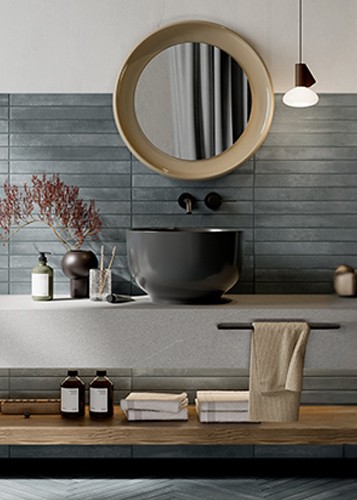
Tile orientation is a powerful yet underrated design tool. In small bathrooms, vertical tiles draw the eye upward, making ceilings seem higher and the room feel more spacious. Horizontal layouts, on the other hand, widen tight spaces, giving compact areas a more expansive feel. These illusions are especially useful in Singapore’s smaller HDB bathrooms, where every inch matters. When paired with durable, low-maintenance tiles, these orientations create a sense of practical luxury that combines functionality with visual impact.
Layout is more than just “how the tiles fit”. It’s how your entire home feels. By planning flow, patterns, and orientation with care, you can maximise space, enhance aesthetics, and ensure your interiors radiate practical luxury even if you aren’t a professional designer.
What Happens During Tile & Stone Installation (And How to Prepare for It)
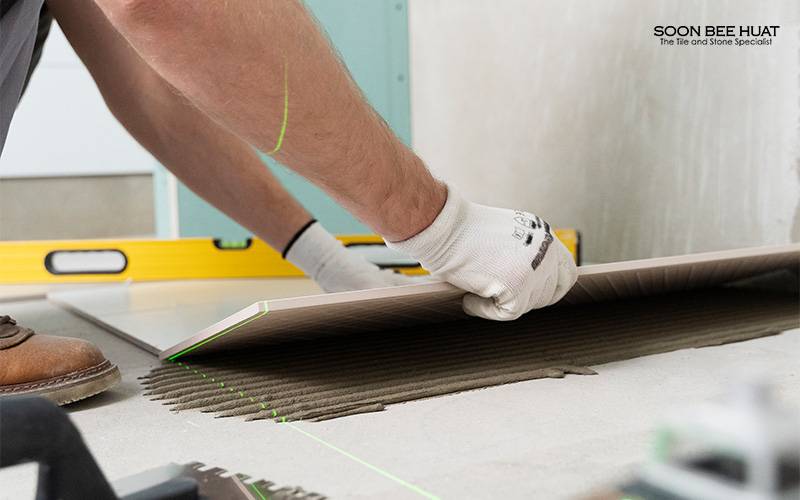
We’ve explored how thoughtful tile choices and layouts can set the stage for a beautiful home, but the real magic happens during installation. After all, even the most stunning tiles can fall flat if they aren’t installed with care and precision. By understanding what goes into the process, you’ll not only be better prepared but also ensure that your investment in practical luxury stands the test of time. Let’s walk through what to expect and how you can get it right from the start.
1. Preparation is Key
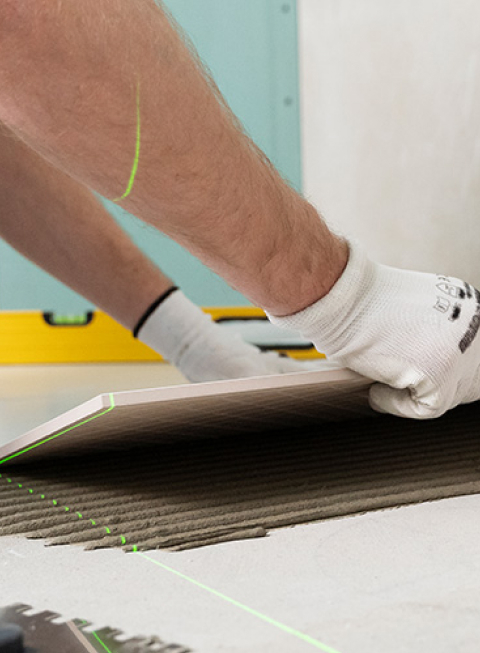
Before a single tile goes down, contractors must prepare the surface. This can include levelling uneven floors, applying a screed, or waterproofing wet areas. Skipping these steps can lead to cracked grout, loose tiles, or water seepage later on. Think of it as building the foundation of your practical luxury- invisible to the eye but crucial for durability.
2. Timeline Breakdown
A typical installation follows a clear sequence:
a. Demolition and surface preparation – Removing old flooring and ensuring a clean base.
b. Underlayment application – Adding a stable layer to prevent shifting or cracking.
c. Layout planning – Dry-laying tiles to check alignment and balance in the space.
d. Tile fixing – Using adhesive to set tiles securely.
e. Grouting and sealing – Filling gaps and finishing the surface for a polished look.
Knowing these steps helps you anticipate timelines, coordinate other renovation works, and manage expectations.
3. Decide Before Laying
Before the tiles are permanently fixed, check for consistency in colour, shade, and pattern across batches. Even slight variations can stand out once installed. Also, confirm alignment with your contractor as small adjustments now prevent costly mistakes later. This step ensures your finished surface reflects the seamlessness expected of practical luxury.
4. Communicate with Your Contractor
Finally, don’t be afraid to ask questions. Clarify grout type, sealing requirements, and maintenance advice. Discuss how they handle uneven cuts at edges or corners, and confirm who is responsible for cleanup. Clear communication reduces surprises and ensures the end result matches your vision.
*Your Homeowner’s Installation Checklist
To wrap it up, here are a few key things you can do before and during installation to stay on top of the process:
-
Ensure surfaces are levelled and properly waterproofed, especially in wet areas.
-
Review the installation timeline with your contractor so you know what to expect each day.
-
Double-check tile batches for colour and shade consistency before fixing.
-
Confirm layout and alignment early- small shifts can change the overall look.
-
Ask about grout type, sealing needs, and post-installation care tips.
With this checklist in mind, you’ll feel more confident and involved in the process, helping you achieve a smoother renovation journey and a flawless finish that truly embodies practical luxury.
How to Keep Your Tiles and Stones Looking Fresh in Singapore’s Climate
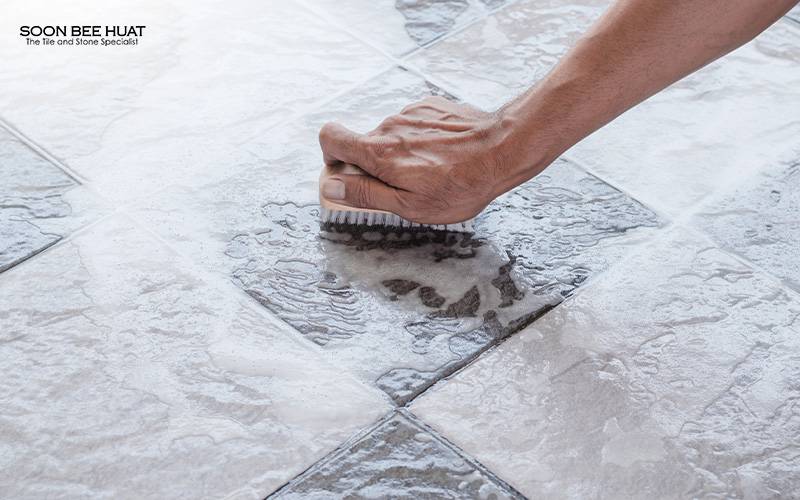
Even after a flawless installation, your tiles and stones require care to maintain their beauty, especially in Singapore’s humid environment. Achieving practical luxury isn’t just about selecting the right materials; it’s also about preserving them so they continue to look elegant and effortless over time. With the right approach, you can enjoy sophisticated, low-maintenance surfaces that last for years.
1. Daily Care Tips
Routine cleaning is your first line of defence against dirt, grime, and soap scum. Simple steps like wiping spills immediately, using pH-balanced cleaners, and drying wet areas promptly can prevent build-up and staining. For toilet floors, it is also important to rinse off any soap or cleaning residue thoroughly, as leftover residue can dry into visible white patches on tiles. Avoid harsh chemical cleaners that can damage sealants or natural stone finishes. Even a quick daily sweep or mop can go a long way toward sustaining the sleek, refined look in your home.
2. Sealing and Re-sealing
Natural stones, such as marble, granite, or limestone, are porous and require sealing to remain resistant to moisture and stains. Typically, sealing should be done every 1–3 years, depending on traffic and exposure. Proper sealing ensures your stone maintains its lustrous finish while reducing long-term maintenance, making it a core part of achieving practical luxury.
3. Grout Care
Grout lines are often the first areas to show wear, mould, or discoloration, particularly in bathrooms. Regularly scrubbing with a soft brush and mild cleaner, along with ventilating spaces to reduce moisture, will help prevent mould and mildew buildup. For stubborn stains, a grout sealer can provide added protection. Well-maintained grout keeps your tiles looking seamless and polished, reinforcing the effortless elegance of practical luxury.
4. Dealing with Singapore’s Humidity
Humidity can cause moisture-related issues such as efflorescence, discolouration, or slippery surfaces. To combat this, ensure adequate ventilation with exhaust fans or dehumidifiers, especially in bathrooms and kitchens. Avoid water pooling on floors, and consider slip-resistant finishes for wet areas. These small, proactive measures help your tiles and stones remain both beautiful and safe, key aspects of practical luxury that combine style with functionality.
By adopting these care habits, you’ll protect your investment and enjoy interiors that continue to look polished, sophisticated, and effortlessly low-maintenance for years to come.
Frequently Asked Questions
1. Can I use the same type of tile for my entire home?
While it’s possible to use the same tile throughout your home, it’s important to consider the function of each room. For example, porcelain works well for living areas and bedrooms, but you might want slip-resistant tiles for bathrooms or natural stone for areas like foyers. Additionally, different rooms may benefit from different finishes—matte tiles for high-traffic areas and polished stones for feature walls or kitchen floor tiles.
2. How can I prevent my tiles from becoming slippery in wet areas?
Slippery tiles are a common concern in bathrooms, kitchens, or balconies. To prevent this, look for tiles specifically designed with slip resistance in mind, often marked with a "R rating" (e.g., R9 for regular slip resistance, R11 for wet conditions). Textured surfaces, non-gloss finishes, and larger grout lines can also help improve traction. Regular cleaning also helps prevent build-up that can make tiles slick.
3. How often should I reseal my natural stone tiles?
Natural stone tiles, such as marble or granite, require sealing to protect them from stains and moisture damage. Depending on the stone type and traffic, resealing is typically recommended every 1–3 years. If water no longer beads up on the surface, it’s a sign that the sealant has worn off and it’s time to reapply. Regular cleaning and avoiding harsh chemicals will also extend the life of your stone’s sealant.
Conclusion
Creating a home is all about striking the perfect balance between beauty and functionality. From selecting the right tiles and stones to planning layouts, ensuring proper installation, and maintaining your surfaces in Singapore’s humid climate, every step contributes to a space that is both sophisticated and low-maintenance.
Durable, moisture-resistant materials such as porcelain and granite allow you to enjoy elegance without constant upkeep. Thoughtful layouts and patterns can visually expand your home, while strategic splurges and smart choices ensure your renovation is both stylish and cost-effective. Finally, regular cleaning, sealing, and grout care preserve your surfaces, letting your interiors remain polished and refined for years to come.
With careful planning and attention to detail, your home can be a space that impresses guests, feels comfortable for daily living, and stands the test of time.
Ready to bring your vision of practical luxury to life? Trust the experts at Soon Bee Huat for high-quality tiles, stones, and professional advice to create a home that’s both beautiful and enduring. Explore our wide range of materials and start planning your sophisticated, low-maintenance space today.
Contact us today to know more!
.jpg)