Key Takeaways
-
Choose a tile for its intended location and product specifications, not just its appearance.
-
Review dimensions, variation, grout, and surrounding finishes together before ordering.
-
Share the selected product and layout preferences with your renovation team early.
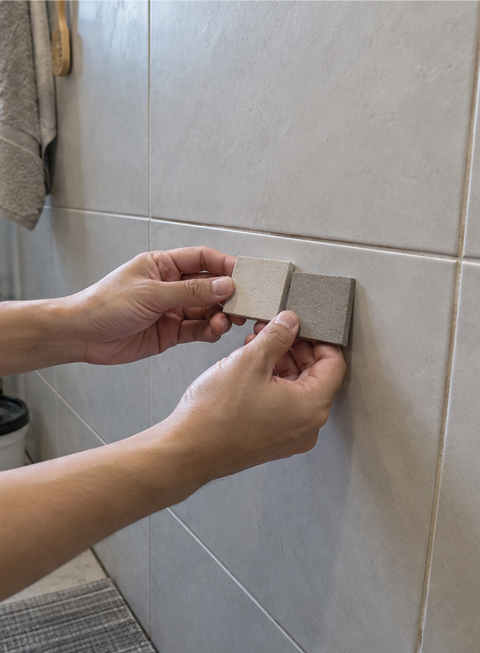
A common mistake is leaving key tile decisions unresolved until work begins. A tile sample may look appealing on its own but appear quite different when repeated across a bathroom floor or placed beside your cabinetry. Discussing these details early gives your renovation team time to raise product or layout questions before you order. A considered tile choice starts with the room, the product’s intended use, and the appearance you want to achieve.
Is the Tile Suitable for the Space?
If you are unsure how to choose tiles, start by checking that the product is suitable for the room where you plan to use it. A decorative backsplash has different requirements from a wet bathroom floor, and an indoor wall differs from an exposed outdoor area. Check whether the product is intended for floors, walls, or both, and review its care guidance.
If you are considering a ceramic floor tile, confirm the specific product is suitable for floors. For wet areas, ask about relevant slip-resistance information instead of relying on a matt appearance or rough feel alone.
Does the Finish Suit How You Use the Room?
Glossy tiles reflect more light, while matt finishes look quieter. Textured surfaces add tactile detail, and honed finishes vary by collection. Compare samples in lighting similar to the room and consider how the surface will be cleaned.
For frequently used floors, ask about the tile's wear resistance and recommended cleaning methods. In wet areas, check the product's documented slip-resistance information rather than judging suitability by its finish alone.
How Will Tile Size Work With the Room?
Large formats create fewer grout joints across the same area, but can require more cuts around doorways, floor traps, or fittings. Smaller tiles add more joints and can make the tile shape part of the design. Your tile choice should account for the room’s proportions as well as the sample.
Compare room measurements with the actual tile dimensions. Ask your renovation team to show where full pieces and cuts may fall before you place an order.
How Much Pattern Variation Do You Want?
Stone-look, wood-look, terrazzo, and natural stone tile collections can vary in colour, veining, grain, or pattern. That variation may be part of their appeal, but a single sample cannot show how the full surface will look.
View several pieces or a larger display where possible. Decide whether you prefer a more uniform result or visible movement, then discuss how the pieces will be distributed across the room.
Have You Decided on the Grout?
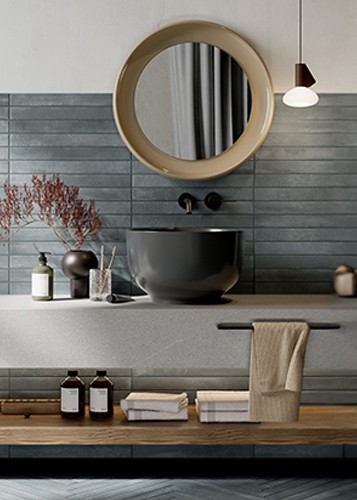
Matching grout makes joints less prominent; contrast draws attention to tile shapes. With subway, mosaic, and hexagonal formats, the grout can become a clear part of the pattern. On larger formats, some homeowners prefer a quieter joint.
Think about grout colour while comparing tiles. The installer should confirm a suitable joint width based on the product and site conditions. Leaving grout colour until the end is a tiling mistake to avoid, especially when it helps define the overall pattern.
Does the Tile Work With Your Other Materials?
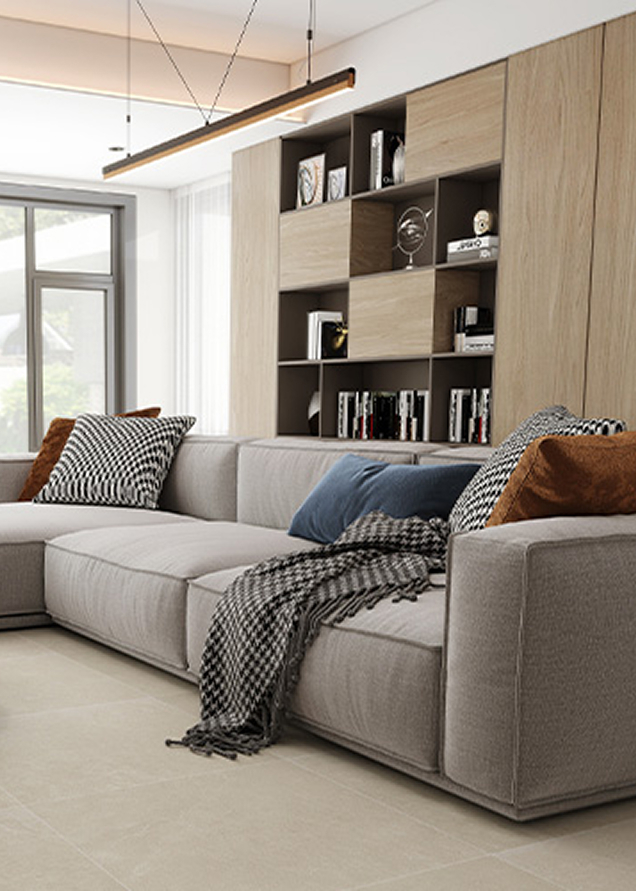
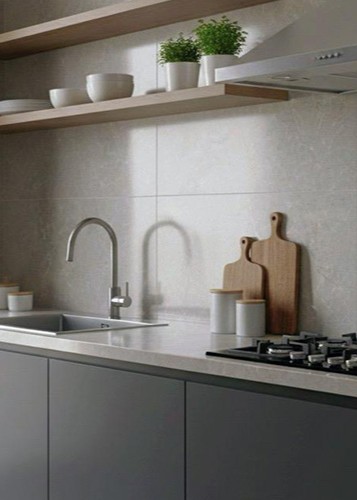
Cabinetry, worktops, paint, sanitary fittings, furniture, and lighting affect how a tile looks once installed. A warm beige tile may read differently beside cool-grey cabinets, while strong veining can compete with a patterned countertop.
Bring swatches or photos when shopping for tiles. Place the materials together and assess the palette as a whole, rather than choosing each finish in isolation.

What Should Your Installer Know Before Work Begins?
Record your tile choice, including the product name or code, dimensions, intended application, finish, orientation, laying pattern, grout preference, and expected variation. A marked-up layout or agreed sample arrangement can clarify your expectations.
Before ordering, confirm the required quantity with your renovation team, including an allowance for cuts and wastage based on the layout. Check product availability and whether additional tiles from a compatible batch can be obtained if needed.
Your renovation team should assess the existing surface and any preparation needed. If you live in an HDB flat, check that your chosen renovation contractor is listed before work begins. HDB requires flat owners to engage a listed contractor for renovation work, including work that does not require a permit.
Make the Decisions Before Installation Starts
Choosing tiles starts with considering the room, finish, dimensions, variation, grout, and surrounding materials together. A tile buying guide can help you compare options, while your renovation team can check suitability, quantities, preparation, and layout before ordering. Agreeing these details before ordering gives you and your renovation team a clear plan for the finished surface.
About Soon Bee Huat
With more than 30 years in the trade, Soon Bee Huat offers a curated range of tiles, stones and mosaics across 230 brands and 1,000 collections. Our three Singapore showrooms let you compare materials in person, while our advisors can help you assess options for your renovation. Bring room dimensions and references for other finishes when you visit, or contact our team to discuss your project before ordering.
Frequently Asked Questions
Should I buy tiles before speaking to an installer?
Explore designs early, but confirm suitability, quantities, surface preparation, and layout with your renovation team before ordering.
Can wall tiles be used on the floor?
Only if the manufacturer specifies that the product is suitable for floor use. Similar appearance does not establish suitability.
Are large tiles always better for small rooms?
No. They may create fewer joints, but room dimensions, fittings, and cut placement affect the result.
How can I tell whether a collection has a lot of variation?
Ask about the shade and pattern variation and view several pieces. Natural stone has inherent differences between pieces.
When should I choose the grout colour?
Compare it alongside the tiles and other finishes. Confirm the grout product and joint width with your installer before work begins.